Why a Backyard Sauna Cabin Might Be Your Best Home Upgrade
The Appeal of a Private Sauna at Home
I remember the first time I stepped into a friend's backyard sauna cabin on a cold November evening. The contrast between the biting air outside and the enveloping heat inside was immediate. We sat on cedar sauna benches, watched the steam rise from the wood-burning sauna stove, and talked for over an hour. That experience stuck with me. It was not just the warmth. It was the sense of having a dedicated space for unwinding, a small ritual that felt both ancient and personal.
Since then, I have looked into what it takes to bring that experience home. A backyard sauna cabin is more than a luxury item. For many homeowners, it becomes a focal point of daily relaxation and a practical way to improve wellness without leaving the property. Unlike an indoor sauna, which requires remodeling a bathroom or basement, an outdoor sauna sits in its own structure. That separation adds to the experience. You walk outside, close the door, and leave the rest of the house behind.
Types of Outdoor Saunas: From Barrel to Modular
When people start shopping for an outdoor sauna, the first choice is often between a barrel sauna and a more traditional cabin-style unit. Barrel saunas are popular because they are relatively affordable and easy to assemble. Their curved shape sheds rain and snow well, and the rounded interior creates a cozy, intimate space. However, the curved walls can limit bench depth and headroom. If you are tall or plan to stretch out, a barrel might feel a bit tight.
A backyard sauna cabin, on the other hand, typically has straight walls and a flat ceiling. That gives you more flexibility in bench layout and allows for better insulation. Many cabin-style saunas come as modular sauna kits. The panels are prefabricated and fit together on site. I have helped a friend assemble a modular kit over a long weekend, and it was surprisingly straightforward. The panels locked together, the electric sauna heater slid into place, and the door window went in with minimal fuss. For someone comfortable with basic tools, a kit sauna is a realistic DIY sauna project. If you prefer a turnkey solution, many companies offer installation as part of the package.
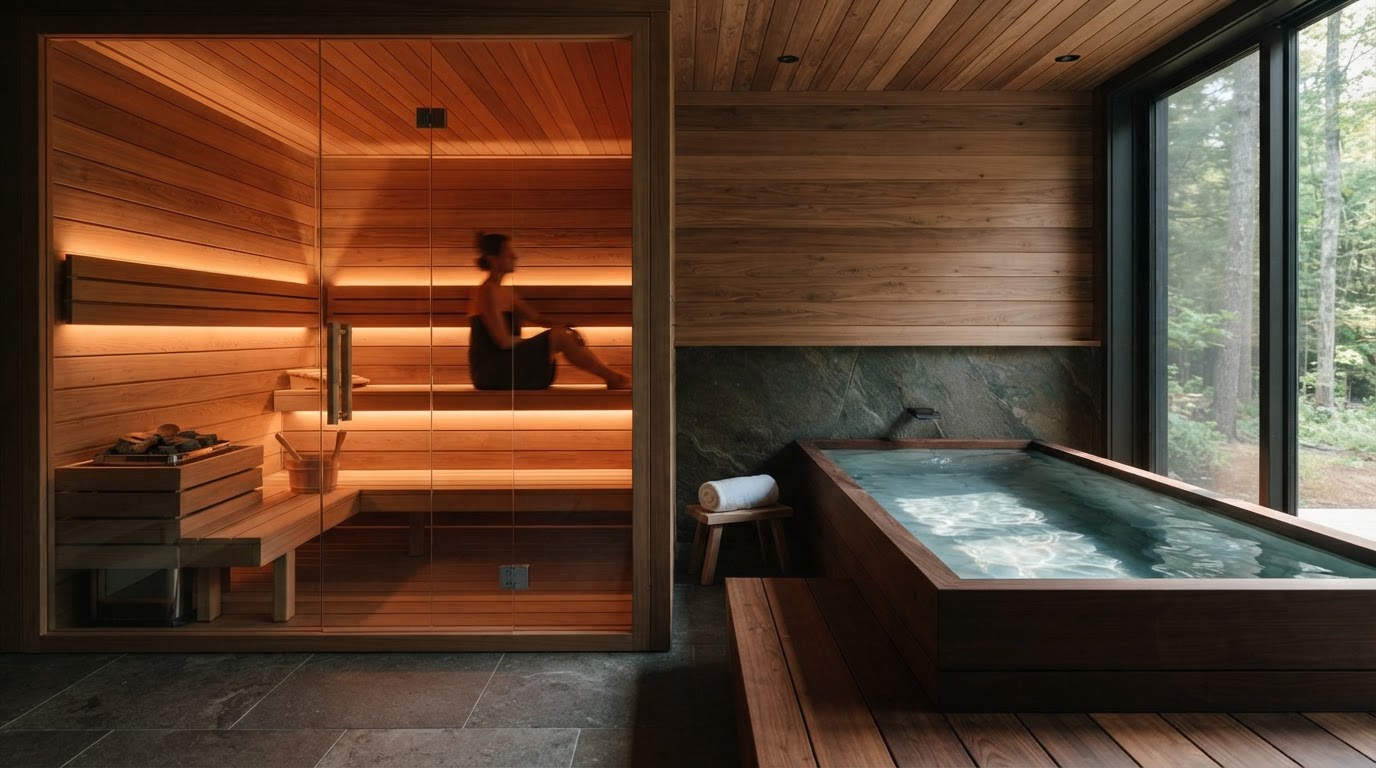
There is also the ICF sauna option, which uses insulated concrete forms. ICF construction gives excellent thermal mass and soundproofing, but it is a bigger project and usually requires a contractor. For most homeowners, a modular or kit sauna strikes the right balance between cost, effort, and result.
Key Considerations Before You Build
Foundation Requirements
Every sauna needs a solid, level base. A concrete slab is the most common choice. It provides a stable surface and can incorporate drains for the cold plunge tub if you plan to add one later. A gravel pad with paving stones works too, especially for lighter barrel saunas. Whatever you choose, make sure the foundation is above grade to keep moisture from wicking into the wood. I have seen saunas rot in under five years because the base sat directly on damp ground.
Permits and Codes
Before you order anything, check with your local building department. Many jurisdictions require permits for any permanent structure over a certain size. The permitting process usually involves submitting plans for the foundation, electrical work, and sometimes the ventilation system. An electric sauna heater needs a dedicated circuit, and a wood-burning sauna stove needs proper clearances. Ignoring permits and codes can lead to fines or, worse, a failed inspection that forces you to tear down the sauna. It is a hassle, but it protects your investment.
Ventilation and Insulation
A sauna needs fresh air. Good ventilation prevents that stuffy, overheated feeling and helps with temperature control. Most designs include a vent near the heater for intake and a higher vent on the opposite wall for exhaust. Insulation is equally important. Without proper insulation, the sauna will lose heat quickly, making the heater work harder and raising your energy bills. In a backyard sauna cabin, the walls and ceiling should be insulated with a vapor barrier to keep moisture out of the structure. The roof materials also matter. Metal roofing sheds snow and rain well, but it can be noisy in a hailstorm. Asphalt shingles are quieter but may need more maintenance in cold climates.
Heating Options: Electric vs. Wood-Burning
The heater is the heart of the sauna. An electric sauna heater is clean, easy to control, and requires no wood storage. You set the temperature with a digital panel, and it maintains the heat within a narrow range. That convenience is hard to beat, especially if you use the sauna daily. However, an electric heater needs a dedicated electrical run, which can add to the installation cost.
A wood-burning sauna stove gives a more traditional feel. The fire crackles, the stones get hotter, and the steam (löyly) feels more intense. There is a ritual in splitting wood, building the fire, and waiting for the stove to reach temperature. For some, that ritual is part of the relaxation. The downsides are more work, the need for a chimney, and the risk of smoke if the stove is not installed correctly. I have used both, and I lean toward electric for everyday use and wood for weekend retreats.
Material Choices: Cedar vs. Other Woods
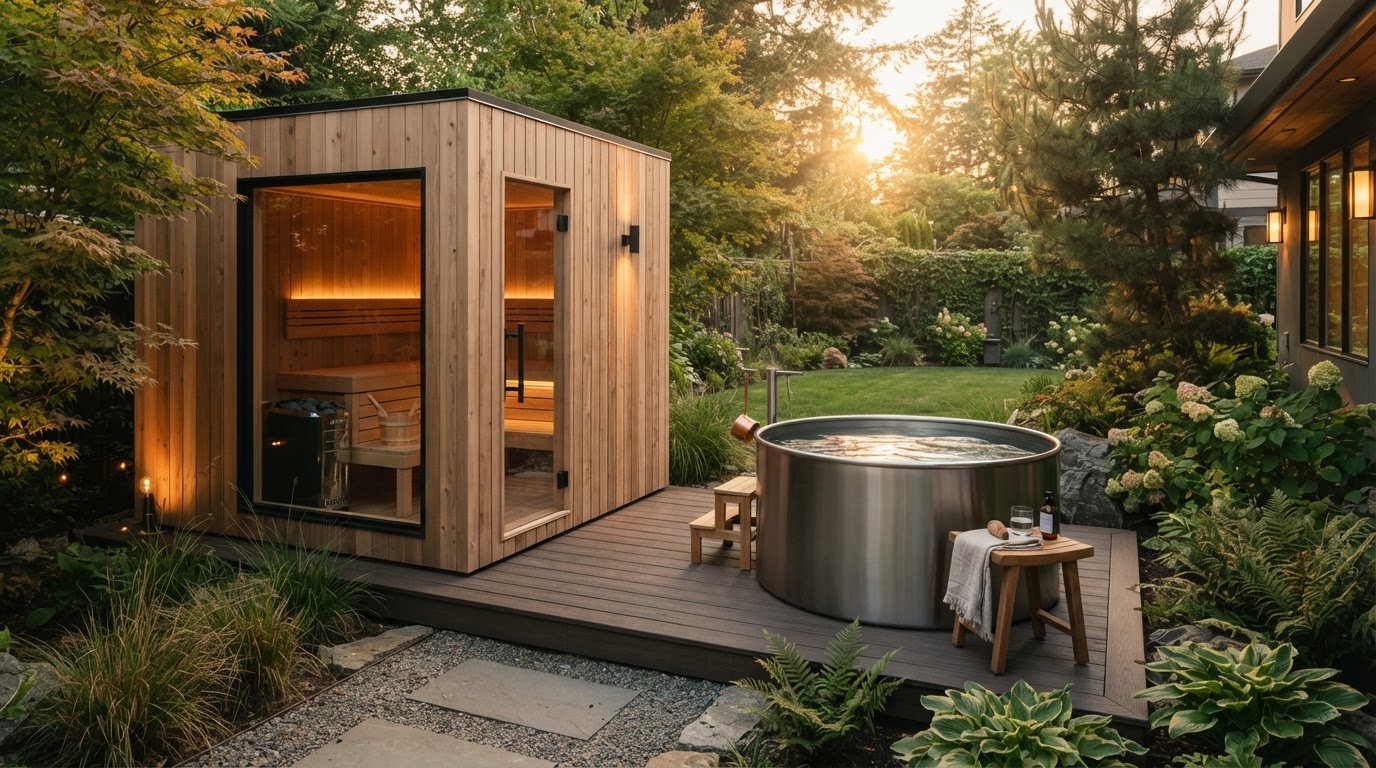
Cedar sauna interiors are the gold standard. Cedar resists moisture, smells pleasant, and stays cool to the touch even at high temperatures. It also contains natural oils that deter mold and insects. Other woods like hemlock, spruce, or aspen are cheaper but may be more prone to warping or splintering over time. For the benches, cedar or aspen are best because they remain comfortable when hot. Avoid pressure-treated lumber, which can release harmful chemicals when heated. The exterior can be any weather-resistant wood or even T1-11 siding. I have seen beautiful backyard sauna cabins finished with vertical cedar boards and stained a dark charcoal. They look like small modern shrines in the garden.
Adding a Cold Plunge Tub
Many sauna enthusiasts pair their outdoor sauna with a cold plunge tub. The contrast between the heat of the sauna and the cold water is invigorating and is thought to improve circulation and recovery. If you are considering a cold plunge, plan for it early. You need a nearby water source, a drain, and enough space. Some plunge tubs are standalone units. Others are built into the deck or foundation next to the sauna. A simple stock tank or a galvanized trough works too. I have a friend who uses a plastic horse trough from the farm supply store. It is not glamorous, but it gets the job done for a fraction of the cost.
Practical Tips for First-Time Buyers
- Start with a realistic budget. A basic kit sauna can cost under $3,000, but once you add foundation, electrical, and site prep, the total can double. A custom backyard sauna cabin with premium materials can easily exceed $15,000.
- Think about placement. Put the sauna where you can see it from the house and where the path to it stays clear in winter. A covered walkway or a short deck makes a big difference in usability.
- Choose a heater size based on the cubic volume of the room, not the square footage. An undersized heater will struggle to reach temperature. An oversized heater will cycle on and off too often, making the heat feel uneven.
- Do not skimp on the door window. A tempered glass window lets in natural light and connects you to the outdoors. It also makes the interior feel larger.
- Consider the long-term maintenance. Wood exposed to the elements needs periodic sealing or staining. Plan for that before you build.
Final Thoughts
A backyard sauna cabin is a project that pays back in daily moments of quiet. It is not about keeping up with trends. It is about creating a space where you can disconnect from screens, feel the heat on your skin, and breathe deeply. Whether you choose a Finnish sauna with a wood-burning stove or a modern electric-heated model, the fundamentals are the same: good insulation, proper ventilation, and quality materials. Take your time planning. Visit a friend's sauna, talk to a local installer, and read up on the options. When you finally step into your own sauna on a cold night, you will know it was worth the effort.